
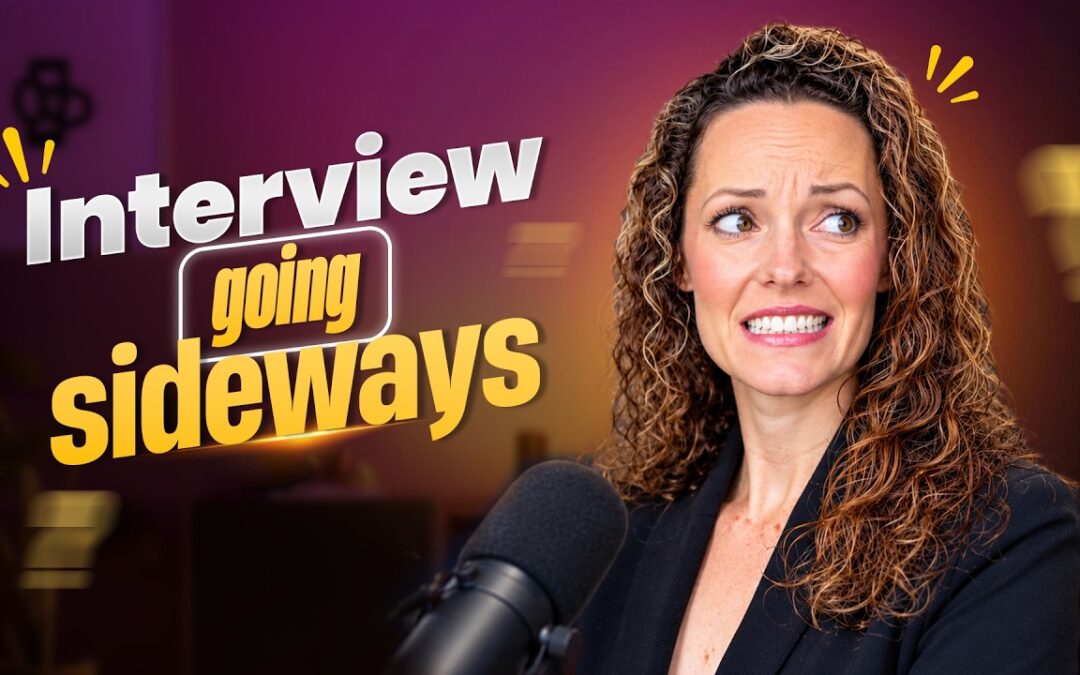
What do you do when a podcast guest will not stop talking, barely answers your questions, turns every response into a sales pitch, or shows up without the equipment you specifically requested?
You do not have to smile through it and hope your editor can fix everything later.
In this solo episode, I’m sharing five common guest problems and exactly how I handle them without embarrassing the guest or sacrificing the quality of the episode.
[04:57] Handling podcast interview dynamics
[08:35] Stopping Interviews for Off-Topic Content
[11:32] Effective interviewing tactics
[15:54] Guests ignoring equipment requirements
[19:43] Managing podcast guest dynamics
[21:44] Hosting and shaping interviews
The most important mindset shift: being gracious to your guest does not mean surrendering control of your show.
Set Expectations Before You Record
Use the first few minutes before the interview to check equipment, listen for background noise, and explain how you conduct the conversation.
If headphones or an external microphone are required, enforce the standard you already communicated. If the guest needs five minutes to find their equipment, wait. If there is no workable setup, reschedule.
A delayed interview is better than knowingly producing an episode that reflects poorly on both of you.
Interrupt and Redirect When Necessary
If a guest turns a simple question into a ten-minute monologue, you are allowed to interrupt.
Try: “Hang on, I want to stop there because you just mentioned something my listeners need to hear.”
Then ask a more specific question or request an example.
If the guest becomes overly promotional, pause the interview and explain privately that you want the main conversation focused on what listeners can learn and apply. Give them space to promote their offer later.
How to Pause and Restart Cleanly
Before stopping the conversation, write down the idea or question you want to return to.
Address the issue off-air, leave a short pause, and restart with a complete question that makes sense on its own.
That gives your editor a clean place to remove the private conversation and reconnect the interview naturally.
Push Past Vague Answers
If you ask what changed after someone launched their podcast and they answer, “It’s been great,” do not move on. Ask:
“What specifically changed?”
“What are clients actually telling you?”
“Can you walk me through one example?”
A strong interviewer listens for whether the question was actually answered and keeps digging until the audience gets useful detail.
Fix Technical Problems Immediately
Pen clicking, microphone bumps, lawn equipment, background noise, or a failing microphone should be addressed when they happen.
Editing cannot always remove noise underneath someone’s voice. Stop, fix the issue, and resume. If it cannot be fixed, reschedule.
You Do Not Have to Publish Every Interview
Recording an interview does not obligate you to publish it.
If the guest is too promotional, lacks substance, makes claims you are uncomfortable airing, or simply does not serve your audience, you can keep the episode unpublished.
Your first responsibility is to your listeners and the reputation of your show.
Before your next interview, know your technical standards, know what you want the audience to learn, and give yourself permission to intervene when the conversation is not delivering either one.
If you want help structuring stronger episodes and questions before you hit record, download my free Script Starter Kit.
Watch more episodes at www.podcastingforfinancialprofessionals.com
Follow Virginia on LinkedIn: https://www.linkedin.com/in/virginiaelder/
Recent Comments