
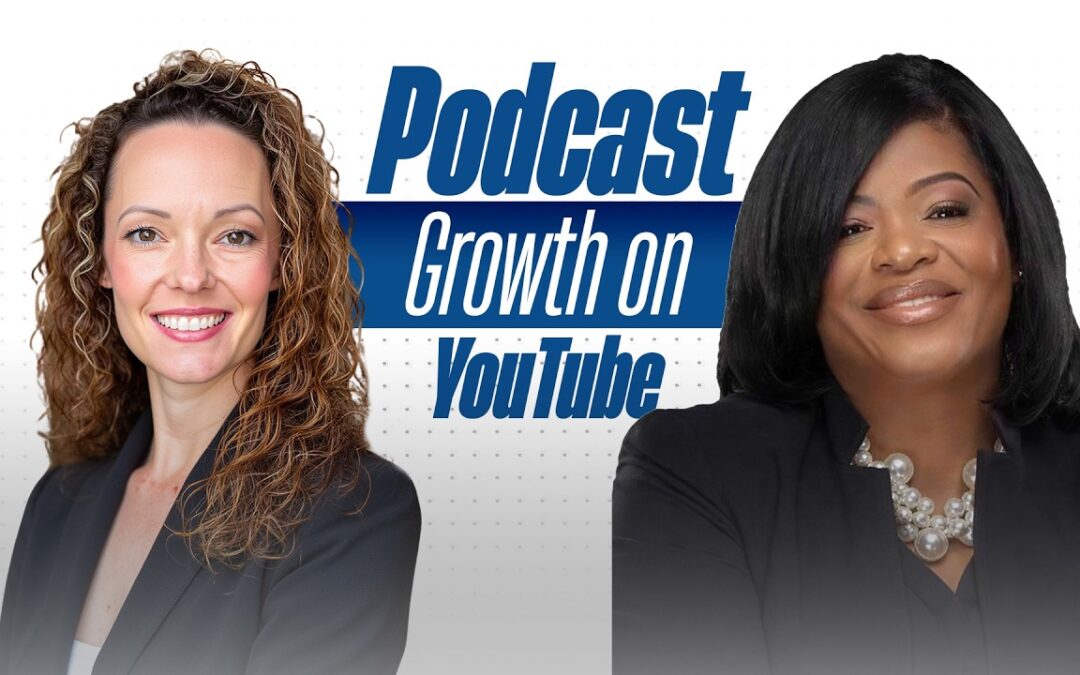
What if your podcast is strong, but the way you publish it on YouTube is holding back its reach?
In this episode, I’m joined by Scherrie Prince, attorney, business coach, and host of the Play Big Faster podcast, for a practical conversation about turning a podcast into a stronger video-first content asset.
Scherrie started her show during Covid after a business coach encouraged her to speak, write, and podcast. At first, she recorded audio-only because being on camera felt uncomfortable. Now, after more than 250 episodes, YouTube has become a major part of her podcast growth strategy.
Why Video-First Podcasting Changes the Strategy
Scherrie’s podcast is still distributed through audio platforms, but her team now thinks about each episode through a YouTube-first lens. That means paying attention to the opening seconds, title, thumbnail, description, tags, timestamps, guest collaboration, and analytics.
One of her biggest shifts was realizing that YouTube is not simply a place to upload a finished podcast. It is a search and discovery platform, and every detail helps the right viewer understand why the video is worth watching.
YouTube SEO, Analytics, and Collaboration
Scherrie shared several tactics that helped her improve reach, including using VidIQ and TubeBuddy, reviewing YouTube analytics, adding translated titles and thumbnails, and noticing where non-English-speaking viewers were already engaging with her content.
One translated video reached more than 43,000 views, which opened up a larger conversation about studying the audience you actually have rather than only the audience you assumed you were serving.
For financial professionals, this is a useful reminder: your podcast strategy should not stop when the episode is edited. The way you package, publish, collaborate, and study performance can shape whether your content continues working after release day.
Better Guest Strategy Creates Better Episodes
Scherrie also talked about the evolution of her guest selection process. In the beginning, she accepted people who were available, even if they were not fully aligned with the purpose of the show. Now, she looks for guests who offer real transformation and verifies credibility claims before featuring them.
A guest may be impressive, but still not be useful for your audience or connected to your business strategy.
Action Steps From This Episode
- Review your YouTube analytics and identify where viewers are actually coming from.
- Choose one focused keyword for each episode and use it in the title, description, timestamps, and tags.
- Compare your thumbnail with other videos your ideal viewer may see in search.
- Ask guests for the correct YouTube channel or social profile before sending collaboration requests.
- Vet guests for audience alignment, credibility, and transformation, not just credentials or availability.
- Create a repeatable workflow so research, uploads, graphics, and promotion do not depend on memory.
Resources Mentioned
YouTube
Libsyn
VidIQ
TubeBuddy
Canva
Asana
Calendly
PodMatch
Spotify for Creators
YouTube Collaboration Feature
If you want to sound more clear, confident, and prepared behind the mic, download the Script Starter Kit: https://podcastabundance.com/scriptstarterkit/. It will help you outline stronger episodes and record without sounding stiff or overly scripted.
About Scherrie L. Prince:
Scherrie L. Prince is an attorney representing entrepreneurs, closely-held companies, and founders navigating expansion, partnership changes, and succession. Her work centers on ownership structure, governance clarity, incentive alignment, and exit design. Unlike traditional advisors who separate business planning from estate planning, Scherrie integrates the two. She helps business owners align their operating agreements, entity structure, and long-term transfer strategy so control is intentional — not accidental. She regularly advises founders on:
- Business formation and governance
- Partnership structure and buy-sell planning
- Succession and exit planning
- Long-term ownership design
- Risk management and operational containment
Through her legal practice and podcast, she focuses on what changes as companies grow and how early structural decisions shape leverage, control, and continuity.
Website: https://scherrieprince.com/
YouTube: www.youtube.com/@PlayBigFasterPodcast
Facebook: https://www.facebook.com/scherriespeaks
Recent Comments