
How Podcast Strategy Turned a Top 2% Show Into a True Client Acquisition Engine
From the outside, it looked like she had it all figured out, but a few weeks later, sensing a shift in the market, she said:
“I can’t stop thinking about our conversation.”
Her courses weren’t filling the way they used to—even with a strong show, consistent content, and ongoing marketing.
At nearly 170 episodes in, she knew it was time for a more strategic approach.
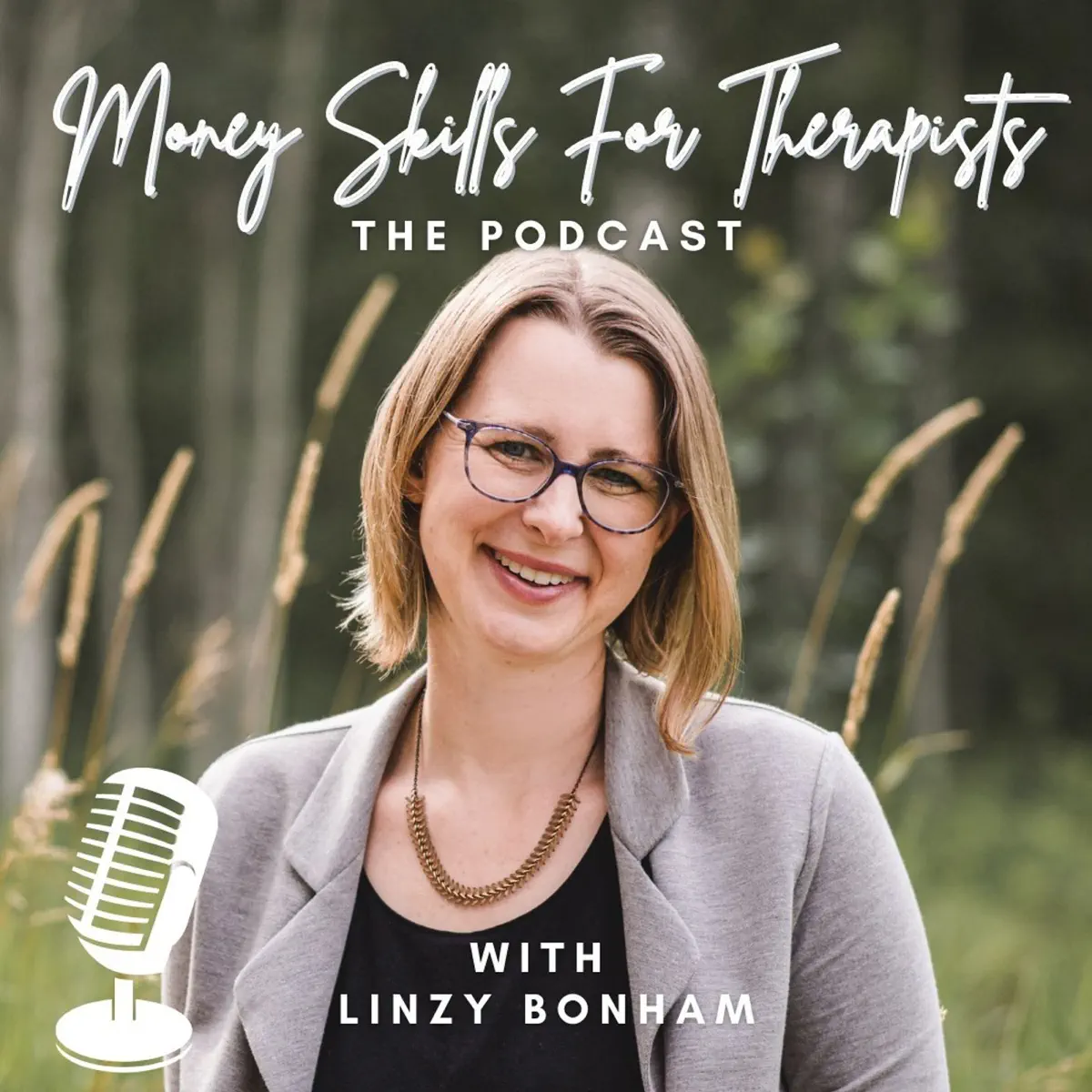
Case Study: Filling Your Courses and Workshops with Podcast Listeners
Client: Linzy Bonham
Podcast: Money Skills For Therapists
Industry: Business Entrepreneurship, Business Management, Courses
Website: Money Skills for Therapists
Listen to the Money Skills For Therapists podcast on Apple, Spotify, or your favorite podcast platform!
Special Episode on Podcasting for Financial Professionals:
I interviewed Linzy – Creating a Safe Haven for Your Followers’ Money Conversations & Feelings | Ep 66
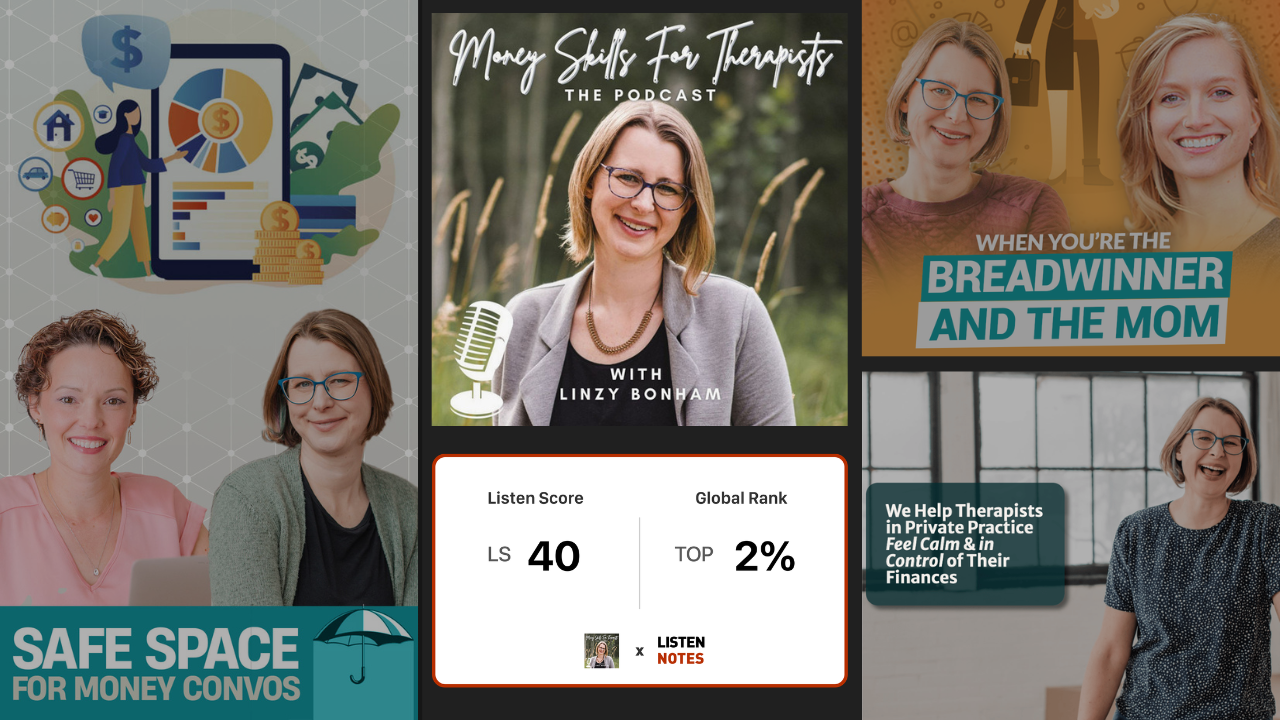
Linzy Bonham, founder of Money Skills for Therapists, is a trusted voice for therapists who want to feel grounded, confident, and supported in their business finances. Through her work, she helps therapists build financial skills that allow them to thrive—not just in their practices, but in their lives.
Her podcast, Money Skills for Therapists, was created as an extension of that mission—offering both the emotional and practical support therapists need to navigate money with clarity and confidence.
By the time we connected, Linzy had already accomplished what many podcast hosts never do:
- Consistent weekly publishing
- Over 150 episodes produced
- A highly engaged, values-aligned audience
- A clear brand voice and meaningful listener connection
And yet, despite all of that momentum, the show wasn’t consistently driving the level of enrollment and traction her business needed.
When a Podcast is “Working”… but Not Driving ROI as Expected
Money Skills for Therapists was already performing well on paper.
- Ranked in the top 2% of podcasts globally
- Consistently bringing in warm, highly engaged listeners
- 170+ niche-focused episodes
- Frequently cited by students as the reason they enrolled
- 200-400 downloads per episode
But behind the scenes, there was a disconnect. Listeners loved the show—but weren’t consistently taking the next step.
As Linzy shared in our initial discovery conversation, “The podcast is working… but it’s not set up strategically to make it a really valuable marketing channel.”
Like many business owners using podcasting for business, the show was not yet fully aligned with her revenue goals.
Key Challenges:
- No clear, singular CTA guiding listeners into her funnel
- Episodes were valuable—but not intentionally tied to offers
- Heavy reliance on interviews (less authority positioning)
- Show notes underutilized for podcast SEO
- Inconsistent listener journey from episode → enrollment
- Backend systems (ads, workflows, assets) were not optimized
The result?
👉 The podcast was building connection—but not consistently generating course enrollments.
It just so happened that Linzy was in search of a production team that could handle all of the edits, the show notes, and maintain strategic oversight of the show moving forward, so we jumped into the Podcast Conversion Lab™ together, knowing already that after the strategic moves were determined, we’d begin implementing the strategy with full-service production inside the Abundance Production Partnership™.
The Strategic Shift: Repositioning the Podcast into a Client-Generating Asset
Going into season 13, we knew listeners would notice a shift, but we were careful to maintain the same music, Linzy’s soft tone across all messaging, and the same style of episode-specific cover art, since these audio and visual “comfort components” help listeners accept other structural changes. Instead of overhauling everything, we made targeted, strategic changes designed to:
- Increase authority
- Expand reach
- Improve listener-to-client conversion
- Simplify execution
1. Simplifying the Platform Strategy (Audio-First Focus)
One of the first decisions: Streamline production and attention
Linzy recognized her audience behavior clearly:
- Listening in the car
- Walking dogs
- Consuming “companion-style” audio
Early in 2025, she’d been told, “If you don’t get on video, you’ll be left behind.” (I bet you’ve heard some version of this too!) So, she’d been reluctantly recording video of her interviews just to check that box, but hadn’t committed the time, energy, or expense to producing great video. This never works… YouTube viewers are an entirely different set of content consumers who expect high-quality visuals. She wasn’t enjoying being on video either, so we removed it as a priority.
Result:
- Less production complexity
- More focus on proven conversion
- Stronger alignment with audience habits
2. Building a Clear Podcast Funnel
We shifted from “content for content’s sake” to intentional podcasting for business. For Money Skills for Therapists, that meant shifting from broad-spectrum content to support therapists and their finances to targeted topics and guests that directly lead listeners into the next launch.
Before:
- Multiple CTAs (subscribe, share, review, enroll in this course)
- Using dynamic ads, but not placed consistently or tagged
- No consistent funnel (multiple funnels running simultaneously)
- No clear next step (detective work required to enroll in a course)
After:
- One primary CTA per episode (mentioned in the intro, ad, and outro)
- Clear listener journey (listener to masterclass to course)
- Guest and topic alignment with offers and launches
Heading into season 13, Linzy was coming off a busy summer and needing less facetime with the internet, requiring us to lean on the funnel she’d already built and that had previously created millions of dollars in her business: Podcast → Masterclass → MSFT Course
3. Reworking Episode Structure to Increase Authority
Another thing I see often in the podcasting for business space, is the over-reliance on interviews. What the business owner/host doesn’t realize, however, is that when your show is primarily featuring other people, THEY are viewed as the expert…not you. You might be the connector, the host, the great interviewer, but not the expert deserving listeners’ business.
Uh oh, red flag, right? 🚩
For listeners to view YOU as the expert, they need to hear from you at least once per month. 1 solo episode to 2 interview episodes is good. Producing a solo episode alternating with an interview episode is better. Since she does 12 episodes per season, we shifted to 4 of each of the following:
- Coaching episodes featuring past and current course enrollees
- Solo teaching episodes
- Curated, highly aligned guest interviews
This ensured listeners regularly heard from Linzy directly—building trust faster and shortening the path to conversion.
4. Curating Guest Strategy (Quality Over Volume)
Another key shift we made was refining the guest strategy. Previously, guest selection had become more reactive—driven by inbound requests rather than a clear standard for alignment. While many of these guests were credible, not all of them directly supported the needs, mindset, or goals of Linzy’s audience. Over time, this can dilute the messaging and weaken the show’s ability to convert listeners into clients.
Beginning in season 13, every guest is curated based on how well they serve the listener, reinforce Linzy’s expertise, and contribute to the broader goal of helping therapists build sustainable, healthy financial practices.
By prioritizing quality over volume, the podcast became more cohesive, more trustworthy, and more effective as a marketing channel—ensuring that every episode strengthens the listener relationship rather than distracting from it.
5. Upgrading Show Notes for Podcast SEO & Conversion
One of the most overlooked opportunities in podcasting for business is the episode description.
Every set of show notes now blends brand-level keywords with topic-specific phrases, ensuring the content aligns with how potential listeners are actually searching. At the same time, we restructured the layout to take advantage of how podcast apps display content—using headings, subheadings, and bullet points to break up text and make it easy to skim.
This shift transformed the show notes from a simple summary into a strategic asset. Each episode now includes:
- Keyword-rich titles
- Structured sections
- Concise takeaways
- A singular CTA that supports current offers
The goal wasn’t just to support current listeners—but to get more visible and expand reach through search.
6. Improving the Dynamic Ad Strategy to Support Consistent Lead Generation
Money Skills For Therapists had already been using dynamic ads within the show, which is a powerful tool when used well. But like many established shows, the offers multiplied organically over time—and that led to inconsistency.
We saw:
- Variations in audio quality, tone, and style
- Inconsistent placement across episodes
- Multiple rotating calls to action
- Outdated promotions still running in the back catalog
Most importantly, there wasn’t a single, consistent message being reinforced week after week. So, we simplified and streamlined everything.
First, we established a clear baseline for audio quality, tone, and structure so every ad felt like a seamless part of the listening experience—not a disruption.
Then, we aligned messaging across the entire episode:
- Intro
- Mid-roll
- Outro
This ensured listeners heard the same call to action multiple times, increasing clarity and follow-through.
For Season 13, the focus was driving listeners to Linzy’s masterclass—her strongest existing funnel. We created a single, high-quality mid-roll ad and placed it consistently within the first 30% of each episode to maximize listen-through and repetition.
Behind the scenes, we also cleaned up the foundation:
- Removed outdated promotions
- Standardized ad placement across episodes
- Organized the system so updates could be made efficiently
As we moved into Season 14, this structure allowed us to quickly pivot messaging to support her next program launch—without disrupting the listener experience.
By Season 15, every episode in the back catalog was aligned and optimized.
The result is a dynamic ad system that works like a true marketing asset—reinforcing messaging, adapting to launches, and consistently supporting lead generation in the background.
The Results: What Happened After Strategic Changes
While I don’t advise business owners to focus on downloads as a measure of success—because they don’t reflect true ROI—in this case, the growth is meaningful.
Audience Growth (28-Day Window)
- Unique listeners: 1,651 → 3,076
- Downloads: 3,142 → 4,046
Episode Performance
- Season 13: ~397–613 downloads per episode
- Season 14: ~470–662 downloads per episode
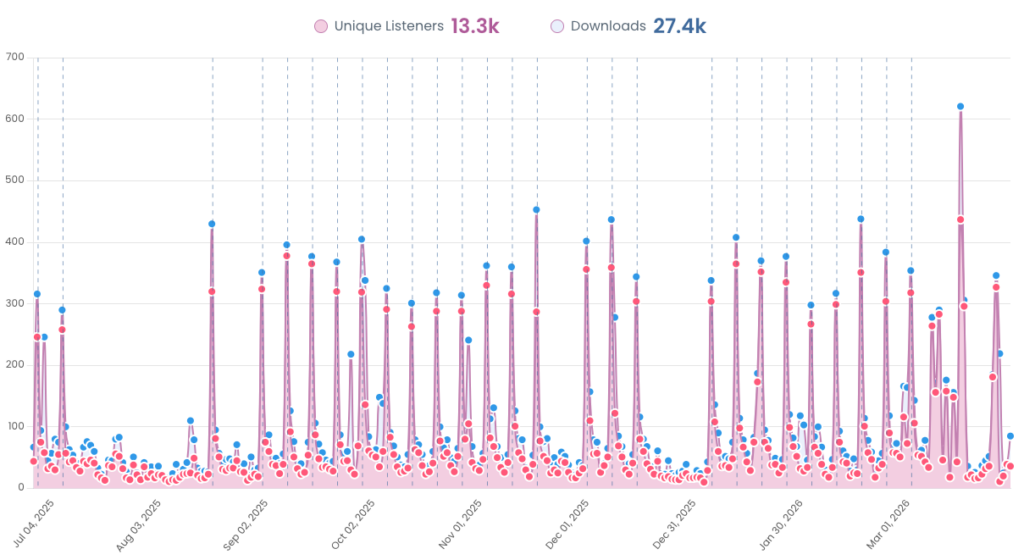
Unique Listens & Downloads increasing steadily from July 2025 through March 2026
Recent episodes reached some of the highest organic performance to date.
If your only goal was to increase listenership, you’d already call this a win. The show is reaching more people, episodes are performing more consistently, and audience engagement is trending in the right direction.
This confirmed the strategy was working—not just behind the scenes, but in how listeners responded.
Funnel & Conversion Impact: Turning Listeners into Buyers
This is where the strategy truly proved its value. While downloads and listener growth are helpful indicators, the real measure of success is whether your podcast is generating leads for your business—and ultimately, clients.
When we began working together, Linzy’s primary funnel—the masterclass leading into her Money Skills for Therapists course—had slowed significantly. Despite consistent content, very few listeners were moving into her offers.
After refining the messaging and implementing a single, consistent call to action across each episode, we saw masterclass registrations 6x from season 12 to season 13. More importantly, this translated into real enrollments, with multiple students citing the podcast as their source, and some identifying it as the only reason they chose to join.
As we moved into Season 14, it became clear that while the masterclass funnel was still working, Linzy’s audience was craving more direct interaction before making a purchase decision.
She introduced live workshops, creating a more immediate and relational entry point into her programs. Across five workshops, registration ranged from a few dozen to well over one hundred participants, with strong attendance rates. These sessions led directly to new enrollments in both her solo and group programs—demonstrating that when your podcast strategy evolves alongside your audience, conversion improves naturally.
Waitlist & Lead Growth: Building Demand That Converts
For Linzy’s program designed for group practice owners, the goal wasn’t immediate sales—it was building a qualified pipeline ahead of enrollment.
During Season 13, the podcast supported steady waitlist growth, bringing in new leads who were already aligned and interested before doors even opened. This is a critical shift when growing your business with podcasting: using your content to build demand in advance, rather than relying on last-minute promotion.
By the time Season 14 aired and enrollment opened, that demand translated into a full cohort. New students enrolled not because of a single launch push, but because of consistent podcast messaging, ongoing audience trust, and the addition of workshops that created real-time connection.
What made this work wasn’t just the numbers—it was the system behind them:
- The podcast built trust and authority over time
- Clear calls to action moved listeners into the right funnel
- Workshops accelerated decision-making through live interaction
- Waitlist growth ensured demand existed before the offer opened
This is what it looks like when podcasting for business is working well—not just more listeners, but a clear and repeatable path from listener to lead to client.
Qualitative Results (Often More Important)
Numbers matter—but feedback tells the real story.
Listeners didn’t just consume content—they connected with it.
One listener shared:
“Thank you so much for the recent podcast episode on being the breadwinner… I really resonated with the conversation about feeling pressure, working through resentment, and distributing household and work tasks.”
This kind of response highlights something critical: the content isn’t just informative—it’s personally relevant. When listeners see themselves in the content, they stay, they trust, and eventually, they buy.
Others described episodes as:
“Grounding”
“A needed conversation”
“A great reminder”
Even more telling—listeners returned to episodes and re-listened.
Inside her programs, students continued listening weekly, using the podcast as ongoing support. Certain topics have been cited as especially impactful, including:
- ADHD and financial patterns
- Perimenopause and business pressure
- Sabbaticals and sustainability
- Foundational financial systems
These themes reflect real-life challenges her audience is actively navigating—which is exactly why they perform well.
These hand-selected topics aren’t just attracting attention—they’re building relationships, trust, and relevance over time. And that’s what ultimately drives someone to move from listener… to client.
Operational Improvements: Reducing Friction Behind the Scenes
One of the most overlooked parts of growing your business with podcasting is what happens behind the scenes. If your systems are clunky, inconsistent, or unclear, it creates bottlenecks that slow everything down—content, promotion, and ultimately, results.
We didn’t just improve content—we improved execution.
What’s Now Streamlined:
- Recording → delivery → production flow so episodes consistently arrive at least 7 days before publish
- Guest asset collection (bios, links, images) to eliminate last-minute searching
- Show notes collaboration by shifting to editable, shared formats (Google Docs with suggestions)
- Ad management systems so updates can be made quickly across the full catalog
- Review and approval process to ensure quality without slowing down publishing
What this means in practice is simple: fewer last-minute scrambles, less back-and-forth, and more consistency. For a business owner, this is where podcasting shifts from “another task” to a reliable marketing asset that supports your growth without draining your energy.
What We’re Doing Differently in Season 15
This is where strategy gets exciting. We have evidence that the shifts made are creating real ROI for Linzy, in addition to growing her show. So moving forward, we’re doubling down on what works, and we will continue to refine based on feedback, her listeners’ behavior, and patterns we see in workshop registrations and course enrollments.
- CTA Shift → Workshops
Instead of pushing listeners to a static resource, we’re directing them to:
- A central workshops page
- Bi-weekly live sessions that provide real-time connection and value
This aligns with what her audience is asking for: more access, more interaction, more support.
- Aligning Content Directly with Active Offers
Episodes intentionally lead into workshop topics like:
- Money shame (listen here!)
- Debt as a tool
- Fee increases
This creates a natural bridge from: content → conversation → conversion
- Strengthening the “Always-On” Funnel
Rather than rotating multiple CTAs, we’re simplifying:
- One clear message
- One clear next step
- Repeated consistently across episodes
Because listeners don’t take action the first time they hear something—they take action after hearing it multiple times.
- Continued Format Optimization
We’ll maintain:
- Coaching
- Solo
- Strategic interviews
While refining:
- Foundational topics
- Buyer-readiness content
- Conversion-focused messaging
What This Means for Other Financial Professionals (You)
If you host your own podcast—or are thinking about it—this case study should shift how you think about what a podcast actually does for your business.
The takeaway is not:
“Get more downloads.”
The takeaway is: Build a SYSTEM that turns listeners into clients.
Here’s what that looks like in practice:
- Your podcast should align with your current offers: Not what you sold last year. Not what you might sell someday. What you’re actively selling right now.
- Your CTA should be simple and repeated: One clear next step. Reinforced every episode.
- Your content should lead toward a solution and it should be easy to buy/enroll/register.
- Your audience needs connection—not just information: Workshops, calls, and live experiences often convert better than passive content.
- Your backend systems matter more than you think: If your workflow is messy, your marketing will feel messy too.
The biggest shift we made for Linzy wasn’t just in content—it was in clarity. She knew her ideal customer and her target listener well. But as a business owner, it’s hard to see whether the content you’re producing is in alignment with your goals. This is where Podcast Abundance’s third-party perspective and analytical lens was immensely valuable.
Linzy probably wouldn’t have said she was seeking clarity, but that’s ultimately what we provided.
Clarity around:
- Who the podcast is for
- What each episode is meant to do
- Where listeners should go next
Open conversations about what she really wanted listeners to do and the implementation of subtle tweaks toward guiding those listeners to the next step are what created the ROI you see in the case study above, as evidenced by:
- Increased listener engagement
- Improved episode performance
- More consistently generated leads
- More therapists enrolling in her workshops and courses
If you want your podcast to generate leads for your business, increase your authority, and expand your reach—it’s not about doing more.
It’s about doing the right things, on purpose. I’d be honored to apply this level of strategy to your show to help you reach your business goals. To see if we’re a good fit to work together, simply book a Podcast Clarity Call™ with me.

Written by Virginia Elder
More From This Category
How “Money You Should Ask” Simplified Production and Achieved Weekly Publish Consistency
Discover how the team behind Money You Should Ask overcame burnout and inconsistency by outsourcing audio editing to Podcast Abundance — resulting in a smoother workflow, consistent episodes, and a stronger brand presence.How a Podcast Editing Partnership Restored...
You Don’t Need to Become an Influencer | EP 124
“I don’t want to become an influencer.” I hear some version of that regularly from financial advisors, CPAs, and other financial professionals who are considering launching a podcast or YouTube channel. The good news is that becoming a lifestyle influencer is not the...
How to Get on More Stages, Build Your Brand, & Stop Waiting for Perfect | Kelly Lynn Adams | EP 123
What if the next level of your business is waiting on you to pitch the thing, show up imperfectly, and stop hiding behind preparation? In this episode, I’m joined by Kelly Lynn Adams, host of Perfectly Imperfect, business growth strategist, advisor, international...
0 Comments
Affiliate Disclosure: Happy Healthy Abundance, LLC dba Podcast Abundance is a participant in affiliate link programs and may accept payment from sponsors as a way to provide you with products, courses, and programs that I love, and may include items from Amazon and any other programs or products I believe will provide benefit you. Affiliate links are located throughout this website. The links provide a small percentage of commission to Happy Healthy Abundance at no additional cost to you. Affiliates and Sponsors have been carefully selected with integrity and I’ll never promote anything or accept sponsorship for a product or course or from a company that I don’t believe will actually improve your life and help you in your journey toward abundance.
download your freebie today!
© 2026 Happy Healthy Abundance, LLC DBA Podcast Abundance
0 Comments